
Extracting Weather from Historical Whaling Logbooks
Across the oceans, whaling ships once sailed vast and treacherous routes—documenting the wind, the waves, and the weather. Today, those handwritten logbooks hold untapped climate knowledge.
eWHALES is extracting these records to help reconstruct centuries of maritime weather and fill critical gaps in our understanding of Earth's climate history.
About this Project
A Hidden Archive of Climate Clues
Modern climate science relies on consistent, long-term observations. But for vast ocean regions—especially before the 20th century—data is sparse.
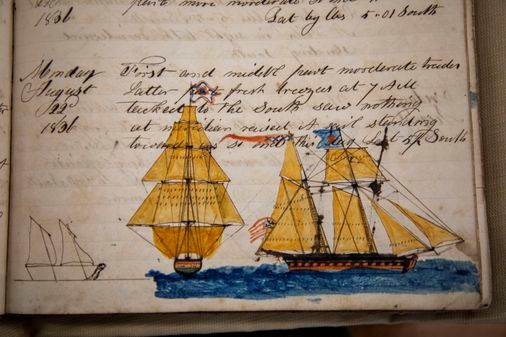
Whaling ships, however, kept detailed daily logs: winds, sea state, storms, and clouds. Preserved in archives for centuries, these logbooks are a treasure trove of untapped climate data.
eWHALES transforms these pages into powerful datasets that help scientists model the past—and prepare for the future.
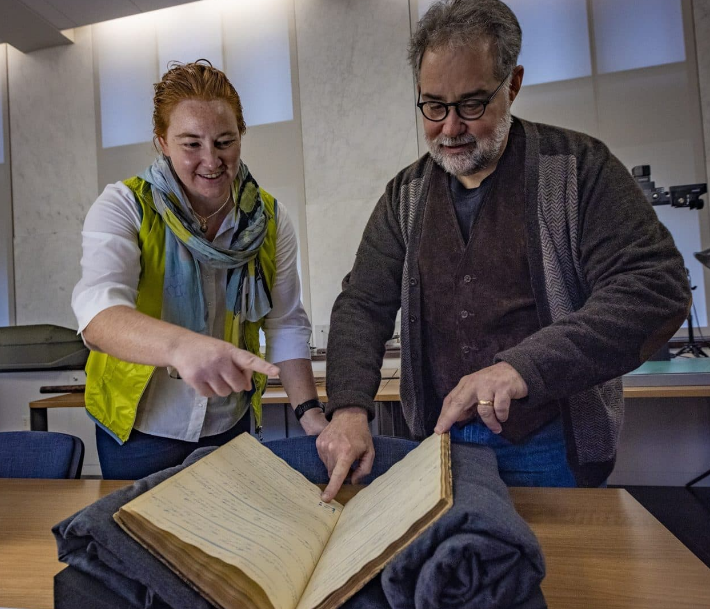
This logbook-derived data can lead to a better understanding of modern climate records and help prepare for future changes.
—Timothy Walker, University of Massachusetts, Dartmouth, co-investigator with Caroline Ummenhofer, Woods Hole Oceanographic Institution.
A Forgotten Climate Record
New England’s Logbooks: A Forgotten Climate Record.
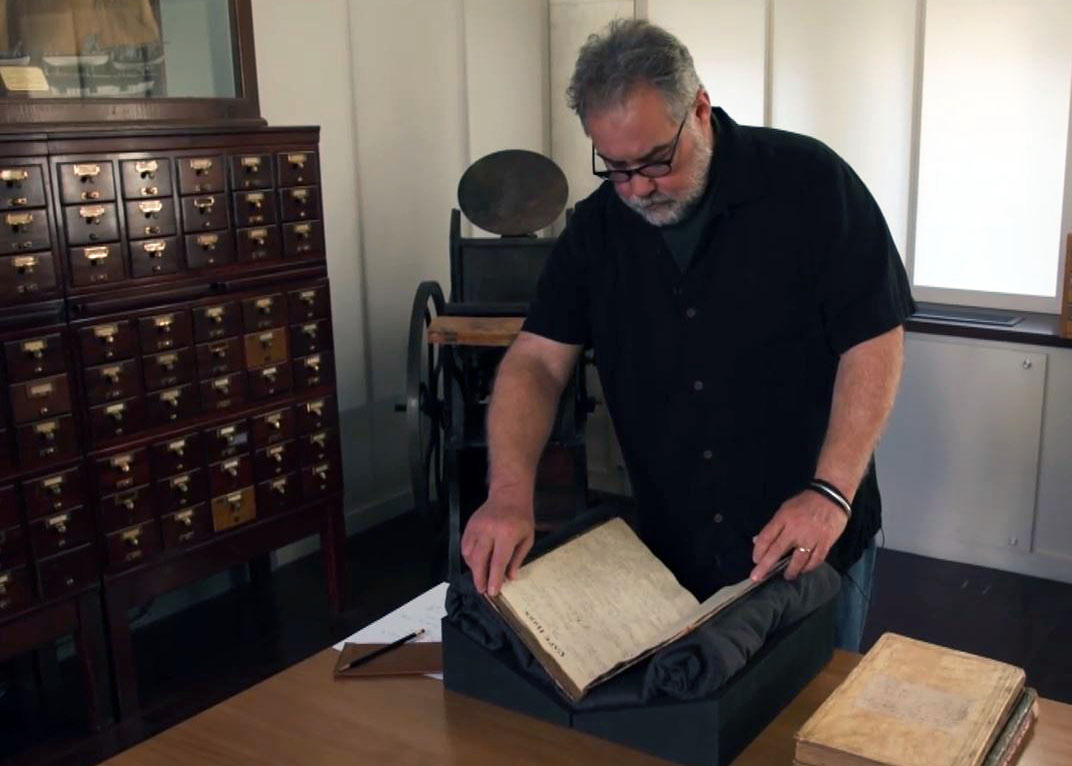
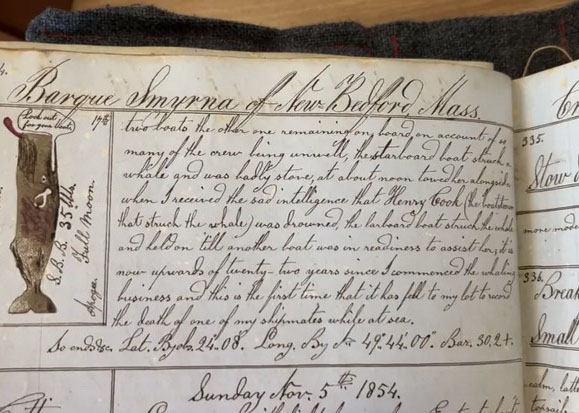
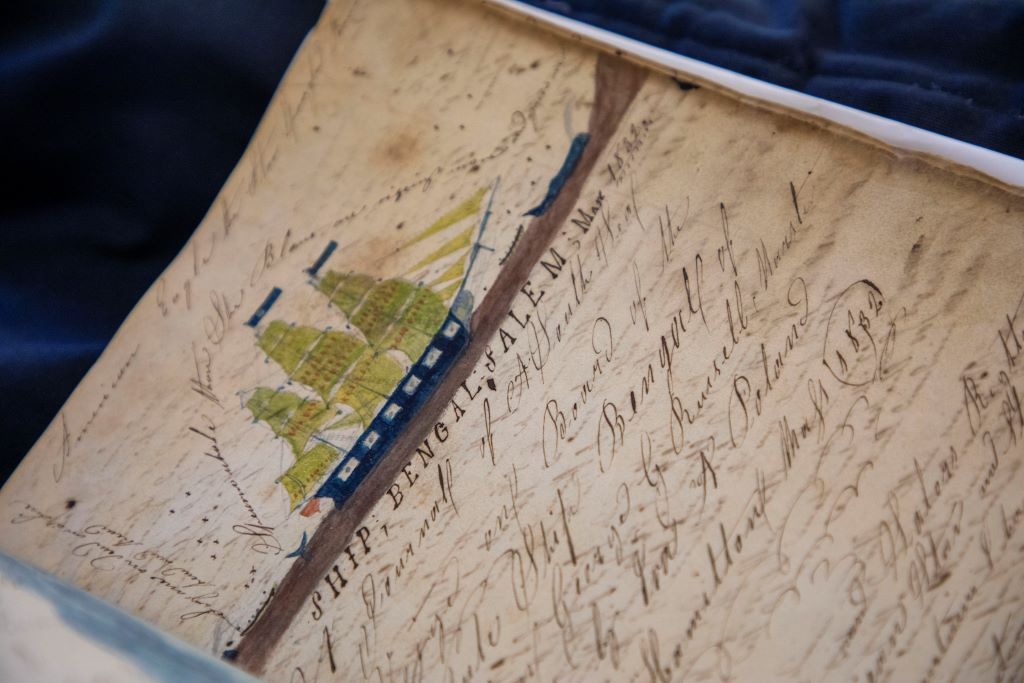
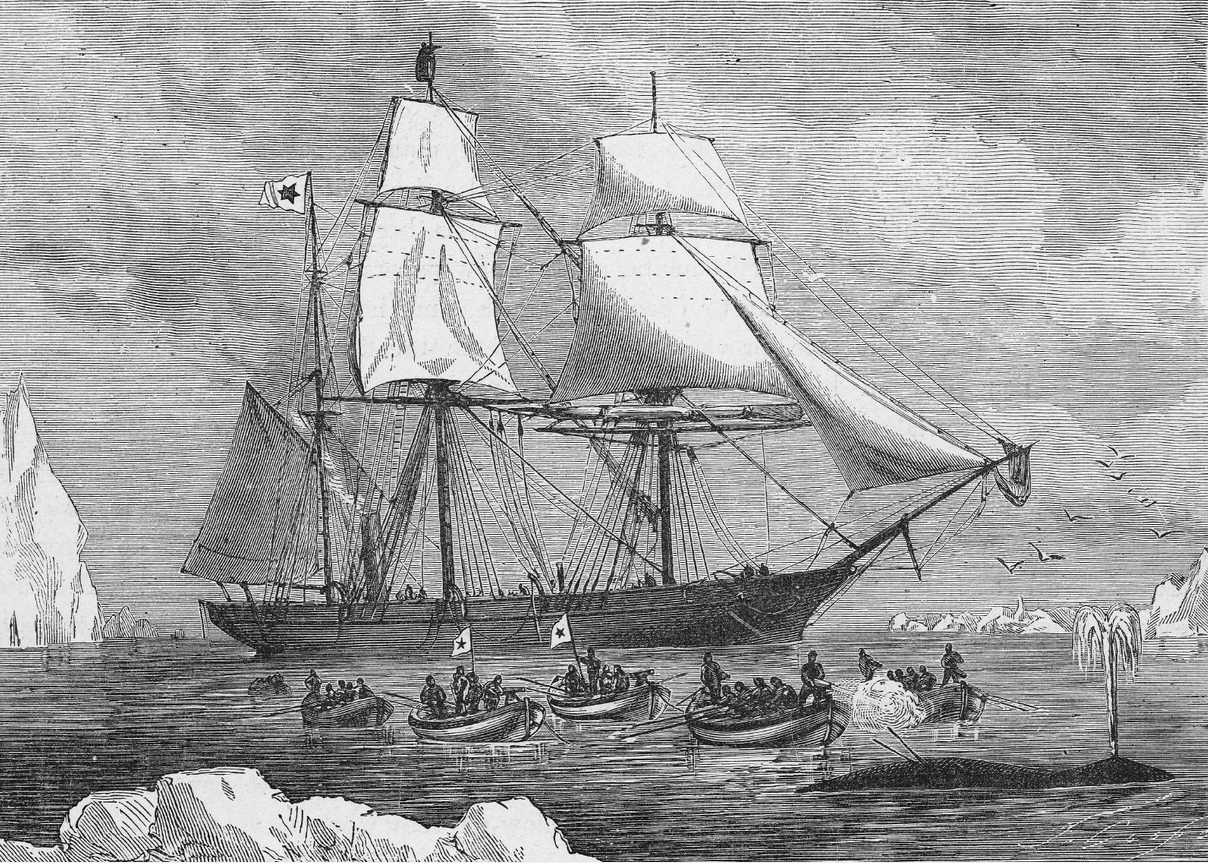
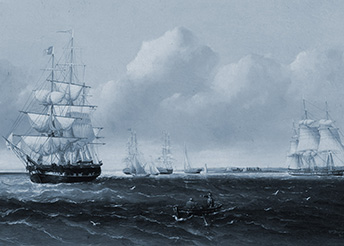
U.S. whaling ships sailed global oceans from the late 1700s through the early 1900s—recording daily details of wind strength, direction, sea state, and weather anomalies in their logbooks.
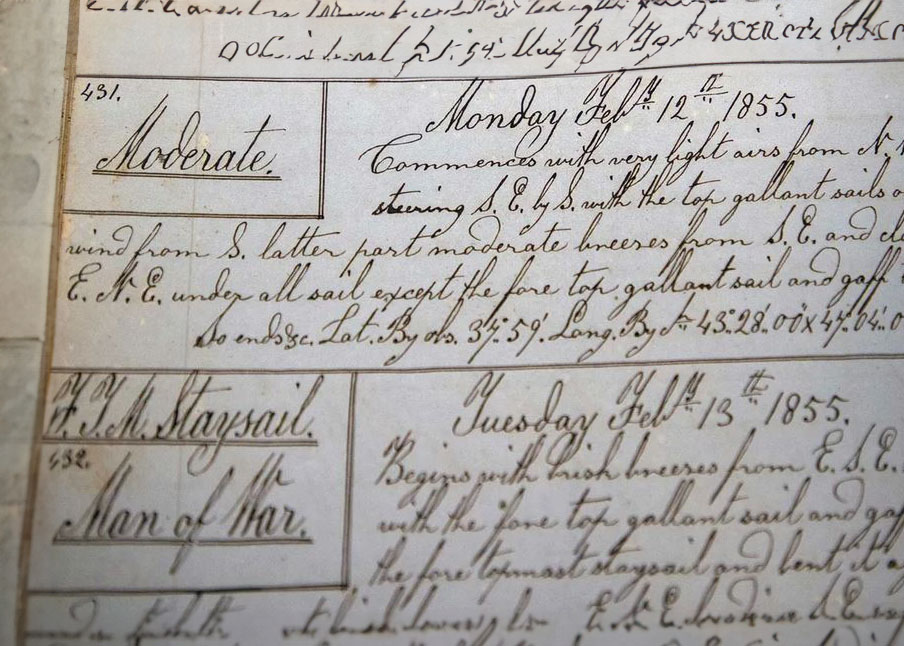
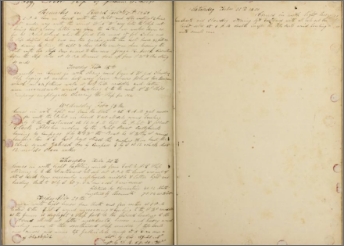
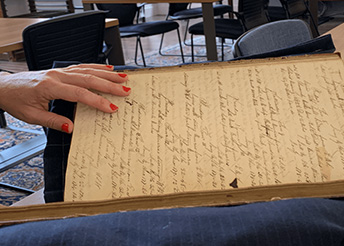
These handwritten journals, preserved in New England archives, predate most instrumental data and follow a rigorous, standardized system used by mariners across the English-speaking world. Though qualitative, their notations can now be converted into quantitative datasets with high confidence.
The result: One of the richest untapped sources of historical maritime weather data in the world.
From Ink to Analytics
Converting 200-Year-Old Notes Compatible with Climate Models
These logbooks weren’t just travel journals—they were technical records. Mariners used consistent classification schemes to describe weather long before the Beaufort wind scale became formalized.
By using modern conversion methods, researchers can translate terms like “fresh breeze” or “rough sea” into structured data compatible with today’s climate models.
eWHALES builds on this foundation to digitize, extract, and analyze thousands of daily entries—filling critical gaps in our understanding of maritime weather before the 20th century.
The Archives
5,000 Logbooks. Five Institutions.
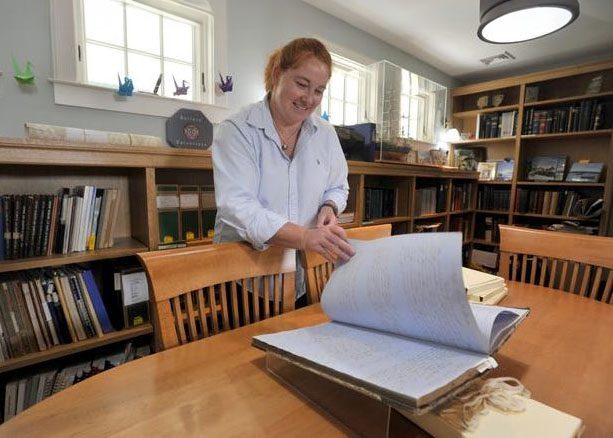
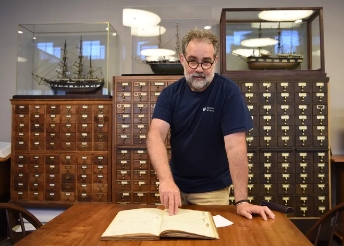
Nearly 90% of all surviving U.S. whaling ship logbooks are held in New England. These records cover multi-year, global voyages and are a vital resource for climate reconstruction.
| Archive | Estimated Logbooks |
|---|---|
| New Bedford Whaling Museum | ~2,500 |
| Providence Public Library | ~800 |
| Nantucket Historical Association | ~800 |
| New Bedford Free Public Library | ~800 |
| Mystic Seaport (Blunt White Library) | ~800 |
These historic documents now serve a new purpose: helping scientists understand past climate to better prepare for the future.
Scientific Impact
Rewriting Climate History
By adding observational data from remote ocean regions and earlier centuries, eWHALES fills critical gaps in climate reanalysis efforts.
The data helps improve:
- Baselines for climate variability
- Accuracy of regional weather reconstructions
- Long-term understanding of oceanic patterns (e.g., El Niño)
This research is contributing to global climate archives, helping today’s scientists model tomorrow’s challenges.
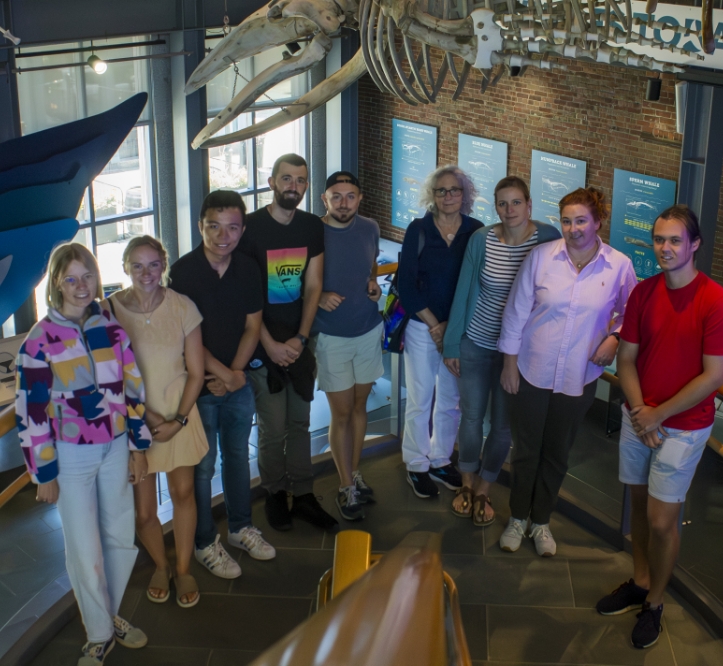
Media and Newsletter
Coverage of the eWHALES project has appeared in major outlets and science publications, highlighting the value of logbook-derived weather data in understanding our changing climate.
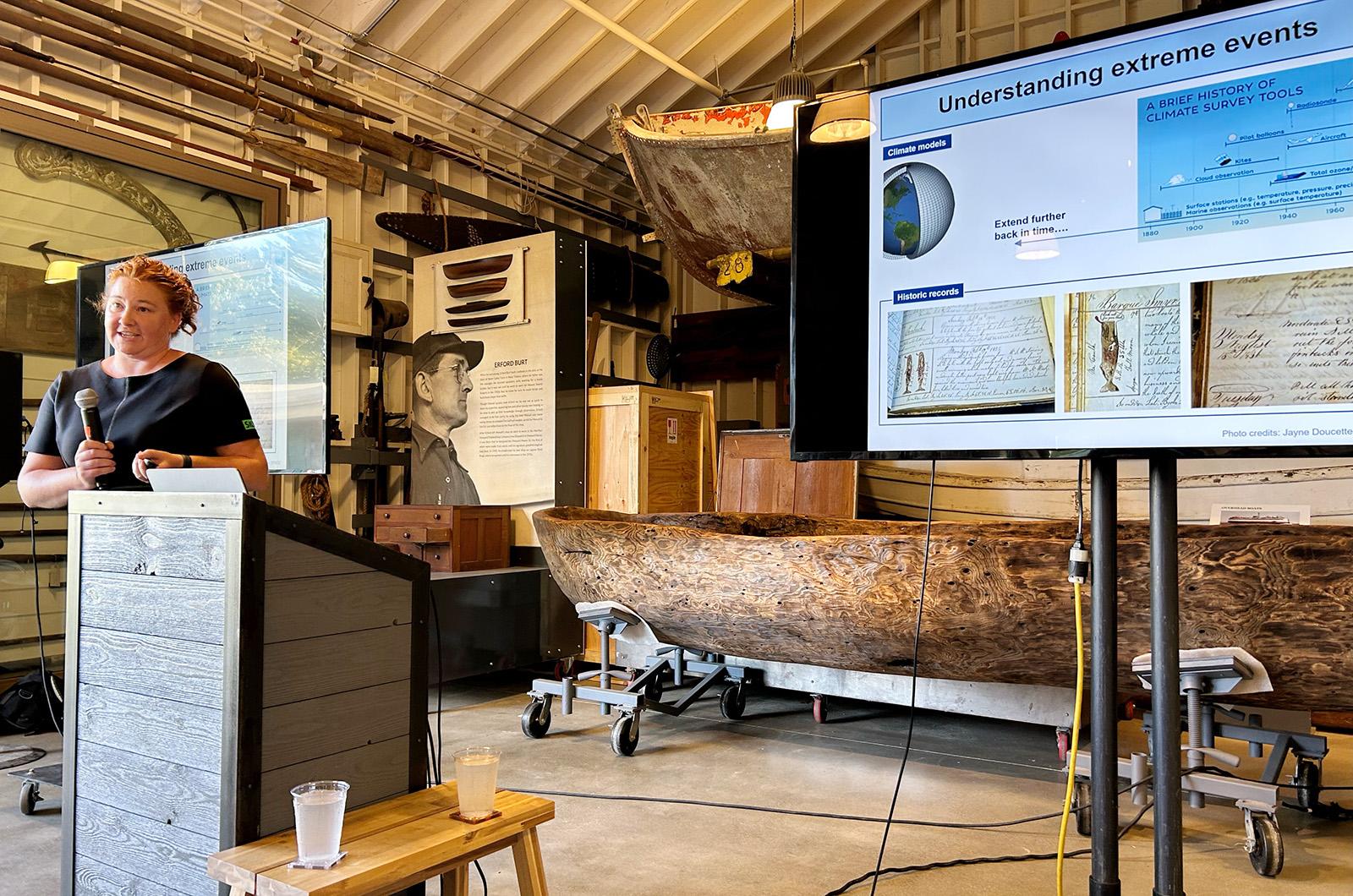
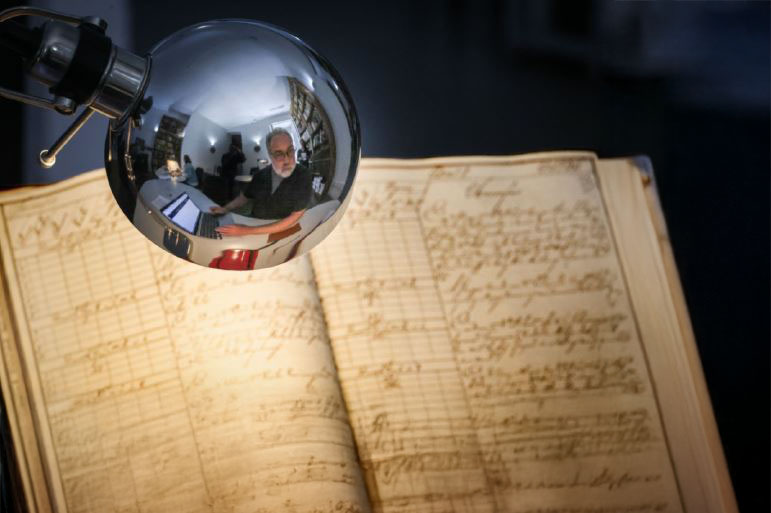
Publications and Products
- Ummenhofer CC, Sander N, Wimberly F, Gordon H, Giacoppo T, Münch B, Bice C, and Walker TD. (2026). Nineteenth century global wind data from historical New England whaling ship voyages (1820-1900 CE). Scientific Data, doi:10.1038/s41597-026-07437-3. Reprint
- Ummenhofer CC and Walker TD (2021). Mining five centuries of climate and maritime weather data from historic records. NAS Ocean shot contributions for U.S. Launch of U.N. Decade of Oceans, Feb. 2021.
- Walker TD (2019). Team up to study climate change. Historic Nantucket, 69 (2), 31.
- Walker TD, and Ummenhofer CC. (2024). Extracting global maritime weather data from New England whaling and Portuguese Navy logbooks (1740-1960). Mainsheet, 1, 108-123, doi:10.61355/001c.94790. Reprint
- Wimberly F, Ummenhofer CC, Giacoppo T, and Walker TD. (2026). Global wind data from nineteenth century New England whaling ship voyages. MBLWHOI Library Dataverse, v2, doi:10.26027/DATAWJBAVU. Dataset